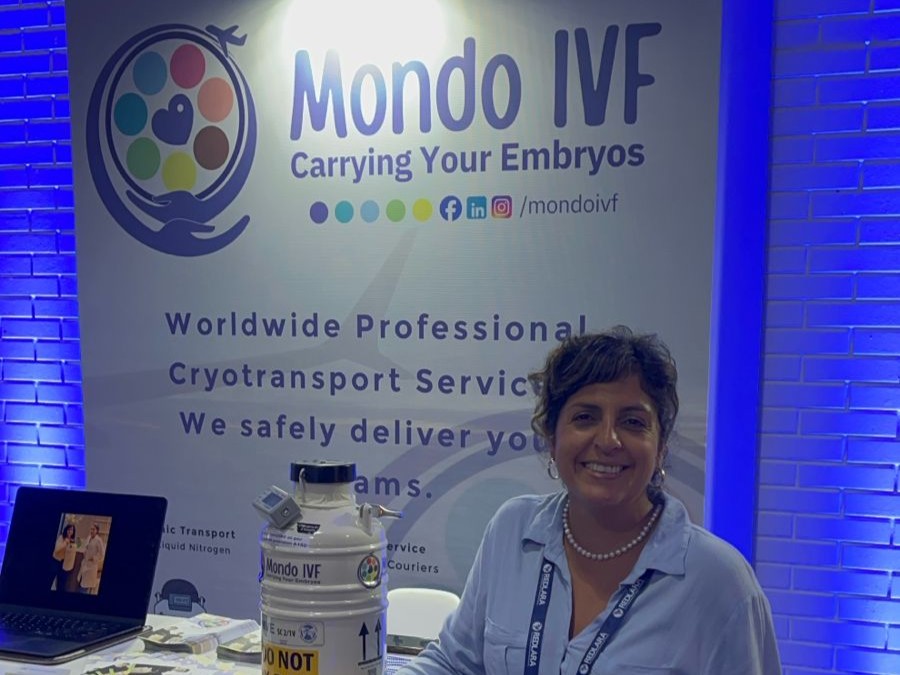
10 Reasons to Choose Mondo IVF for Your Embryo Transport
Choosing who carries your embryos across a border is not a logistics decision. It is a decision about who you trust with something that cannot be replaced, moved twice, or left waiting on a tarmac while someone figures out the paperwork.
Most patients researching embryo transport providers hit the same wall: every company’s website says “safe,” “secure,” “experienced.” None of that tells you what actually happens to your embryos between the clinic where they’re frozen and the clinic where they’ll be transferred. So here are ten concrete reasons intended parents and clinics choose Mondo IVF — nine of them things you can verify by asking any provider to match, and one that no checklist can capture.
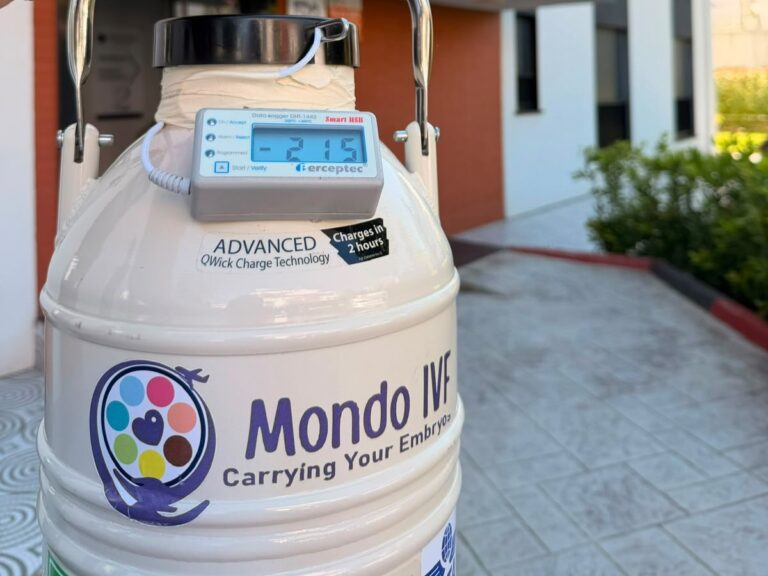
1. Hand-Carry (OBC) Only — Your Embryos Never Fly as Cargo
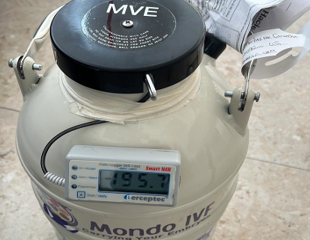
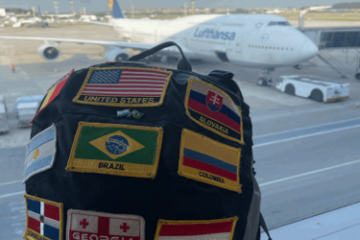
Mondo IVF moves reproductive material exclusively through On-Board Courier (OBC) transport. A trained courier carries your dry shipper in the cabin, seated beside it, for the entire flight. Your embryos are never checked as freight, never placed in a cargo hold, and never separated from human oversight between pickup and delivery.
Why it matters: cargo freight introduces handoffs — baggage handlers, warehouse storage, customs holding areas — that a hand-carry courier eliminates by design. Fewer handoffs mean fewer opportunities for temperature excursion or delay.
2. No X-Ray. Ever.
This one is non-negotiable and it’s written into how Mondo IVF trains every courier: dry shippers are never run through airport X-ray or CT scanning equipment. Couriers are briefed on the manual inspection protocols accepted by TSA, aviation security in partner countries, and customs authorities specifically for cryogenic biological material, so screening happens without imaging.
3. Temperature Monitored Every 20 Minutes, Not "Periodically"
A dry shipper holding liquid nitrogen vapor doesn’t announce a problem until it’s often too late to fix. Mondo IVF couriers check and log the shipper’s temperature at fixed 20-minute intervals throughout transit using precision data loggers — not “occasionally,” not “at each connection,” but on a fixed clock, door to door.
Citeable fact: MVE dry shippers used by Mondo IVF are validated to hold cryogenic temperature for 7 to 21 days without a liquid nitrogen refill, depending on shipper size, giving multi-leg international routes a wide safety margin even when a connection is missed.
4. Regulatory Fluency Across 30+ Countries
Cross-border reproductive transport touches customs law, aviation security regulation, and — depending on the route — country-specific health authority permits. Mondo IVF operates across more than 30 countries and maintains active working knowledge of authorities like COFEPRIS and ANAM in Mexico, plus the IATA packaging and documentation standards (P650) that apply globally to biological substances.
Why it matters: a provider unfamiliar with a country’s import and permit requirements is learning on your shipment. One with route-specific experience already knows which document gets rejected and why.
5. Data Privacy Handled Like the Regulated Activity It Is
Your embryos travel with documentation that can identify you — which means the courier handling that paperwork is handling protected health information under HIPAA, LGPD, or GDPR depending on origin and destination. Mondo IVF treats this as a compliance obligation, not an afterthought: pseudonymized tracking codes, encrypted data logging, and signed Business Associate or Data Processing Agreements with clinic partners, aligned with the notification timelines each regulation requires. (For the full breakdown of what these protections cover, see our guide on medical courier privacy compliance under LGPD, HIPAA, and GDPR.)
6. Full Temperature and Custody Reports After Every Delivery
When your embryos arrive, Mondo IVF doesn’t consider the job finished until the receiving clinic and the patient have the complete record: the temperature log for the full transit window, the signed chain-of-custody form, and confirmation of delivery condition. This is standard for every shipment, not a premium add-on.
7. A Contingency Plan for Missed Connections, Not a Scramble
Flights get delayed. Connections get missed. What matters is whether that turns into a crisis or a non-event. Because Mondo IVF’s dry shippers are validated to hold temperature for 7 to 21 days depending on size, a missed connection still leaves days of safety margin — and couriers are trained on rebooking protocols and next-flight-out standards before they ever leave with a shipment, not improvising once they’re already at the gate.
8. Real-Time Updates While Your Embryos Are in Transit
You shouldn’t have to wonder where your embryos are. Mondo IVF provides status updates while the shipment is actually moving — not just a confirmation email when it’s booked and a delivery notice when it’s done. For a family watching a connecting flight on a tracking app somewhere else, that visibility is often the difference between an anxious wait and a manageable one.
9. Built for the Cases That Don't Fit a Standard Route
Not every transport is a straightforward clinic-A-to-clinic-B transfer. Egg or embryo donation, surrogacy arrangements, and LGBTQ+ family-building journeys often involve multiple clinics, multiple consents, and documentation that a generic “point to point” courier isn’t set up to handle. Mondo IVF’s process is built to flex around these cases rather than force them into a template that doesn’t fit.
10. One Dedicated, Multilingual Courier — Because the Human Touch Is Everything
Every reason above can be checked against a spec sheet. This one can’t, and it’s the reason the rest exist in the first place. As Mariana Retamales, one of Mondo IVF’s client care specialists, put it better than a marketing brief ever could:
“One of the reasons to choose Mondo is our human touch. We treat every case individually because every fertility journey is unique. We understand that the heart of our work is your family, and we are fully aligned with that mission. While efficiency, metrics, and performance indicators are important, we also believe that compassion, empathy, and genuine human care make all the difference. At Mondo, we never lose sight of what truly matters: helping bring families together. Sometimes, the human touch is everything.”
In practice, that means one courier assigned to your case from pickup to delivery — not a shared pool, not a support queue — who communicates with you natively in English, Portuguese, or Spanish, and treats your shipment as your family’s next step, not a tracking number.
Frequently Asked Questions
What makes hand-carry (OBC) transport different from standard medical freight?
Hand-carry transport means a trained courier keeps the dry shipper in the aircraft cabin for the entire route, rather than placing it in cargo hold. This eliminates the baggage-handling and warehouse-storage handoffs that freight shipments go through, reducing the number of points where temperature control or custody could be compromised.
How long can embryos safely stay in a dry shipper during international transport?
MVE dry shippers used for embryo transport are validated to maintain cryogenic temperature for 7 to 21 days without a liquid nitrogen refill, depending on shipper size. This gives multi-leg international itineraries a meaningful safety margin even if a connection is delayed or rebooked.
Do embryo transport couriers need to comply with HIPAA, GDPR, or LGPD?
Yes. Because shipping documentation can identify the patient, couriers handling reproductive material are typically classified as Business Associates under HIPAA or Data Operators under LGPD and GDPR, and are expected to follow the same breach-notification and data-protection obligations as other regulated health entities.
What documents does a clinic need before an international embryo transport?
Requirements vary by destination but commonly include a clinic release authorization, patient consent for transport, and — for countries like Mexico — an import permit from the relevant health authority (COFEPRIS). A transport provider with regulatory experience on the specific route can confirm the exact list before shipment.
Will my embryos ever go through an airport X-ray machine?
No, not with a hand-carry provider that enforces a no-X-ray policy. Reproductive material should undergo manual inspection procedures agreed upon with aviation security authorities, avoiding any imaging exposure to the cryogenic container or its contents.
0 Comments