What Documents for Gamete and Embryo Transport?
When a clinic confirms your materials are ready to move, the priority shifts to paperwork. Documentation for reproductive material—including embryos, sperm, and oocytes—is not a side task; it is a vital part of the chain of custody. The right files confirm identity, ownership, medical handling, and import eligibility. Conversely, a single missing signature or incorrect file can stop a transfer at the clinic level, at customs, or before the journey even begins.
To ensure a smooth journey, required documents are organized into three core groups:
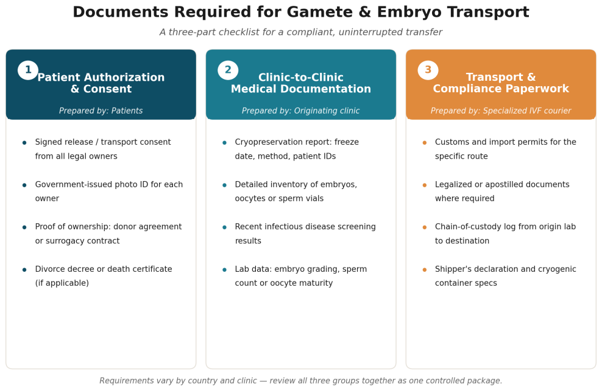
1. Patient Authorization and Consent
This is the most critical step for legal clearance. Before any material leaves the lab, the originating clinic requires explicit permission to hand over the samples.
- Dual Authorization: In most cases, both intended parents or all legally recognized owners must sign the release or transport consent. For example, a spouse cannot authorized the transfer of their partner’s samples using only their own ID; both parties must provide verified identification.
- Proof of Ownership: If the materials involve donor arrangements, surrogacy plans, or previous legal agreements (such as a divorce decree or death certificate), additional records are mandatory to confirm who has the current authority to approve the move.
2. Clinic-to-Clinic Medical Documentation
The receiving clinic must verify exactly what is arriving to ensure it is compatible with their lab protocols.
- Cryopreservation Report: This includes the freezing date, storage method, and patient identifiers.
- Detailed Inventory: A clear record of the embryo inventory, number of oocytes, or sperm vials being moved.
- Health Screenings: Most clinics require recent infectious disease results for the patients or donors involved to comply with local storage and safety regulations.
3. Transport and Compliance Paperwork
Once the materials leave the clinic, they must meet the requirements of international logistics and border authorities.
- Customs & Import Permits: Depending on the route, specific permits or legalized documents must be completed before the shipment can even depart or/and arrive.
- Chain-of-Custody Logs: Documentation that tracks the shipment from the moment it leaves the origin lab until it is safely received.
- Shipper’s Declaration: A formal description of the material and the cryogenic container used for transport.
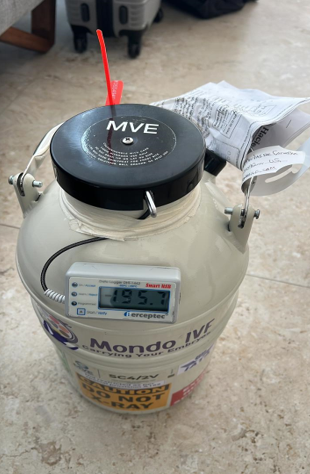
Why Standardization Doesn't Exist
A transfer between Spain and the US follows a different path than one between the UK and Australia. Each country—and often each individual clinic—has its own “release/intake” requirements.
This is where general couriers often fail. IVF-specific logistics providers understand the nuanced language required for customs and the specific health codes needed to prevent a shipment from being held at a border. Using a specialized partner ensures that the medical, legal, and logistical files are reviewed as a single, cohesive package.
Conclusion: The Safest Approach
Timelines for transport vary significantly; while some cases are ready in days , others take much longer because permits, clinic acceptance, or legalized documents must be completed first. Speed is important, but in reproductive transport, speed without strict document control creates avoidable risk. The most secure way to move gametes is to have all medical records, consent forms, and customs requirements reviewed together as one controlled process. At Mondo IVF, we specialize in this end-to-end coordination to ensure that every signature and ID is in place before the dewar ever leaves the lab.
Frequently Asked Questions
Can I sign for the transfer of my partner's sperm or our shared embryos alone?
Generally, no. Most clinics and international regulations require signed consent and ID from both partners/owners. This protects the legal rights of both parties and ensures the clinic has full authority to release the material.
Does the paperwork change for sperm or oocytes compared to embryos?
Does the paperwork change for sperm or oocytes compared to embryos? The legal consent and transport documents are similar, but the medical reports differ. Sperm and oocytes require specific lab data regarding count or maturity, whereas embryo reports focus on grading and developmental stages.
Who is responsible for preparing these documents?
Who is responsible for preparing these documents? The originating clinic prepares medical reports, the patients provide signed authorizations/IDs, and a specialized transport partner like Mondo IVF handles the customs and logistics paperwork.
What happens if a document is missing?
A missing or incorrect file can cause the shipment to be held at the clinic or blocked at international borders. We verify the entire “document shield” before any physical movement occurs to avoid these delays
0 Comments