Fertility Awareness Week: 1 in 6 Adults Worldwide Has Faced Infertility, According to WHO

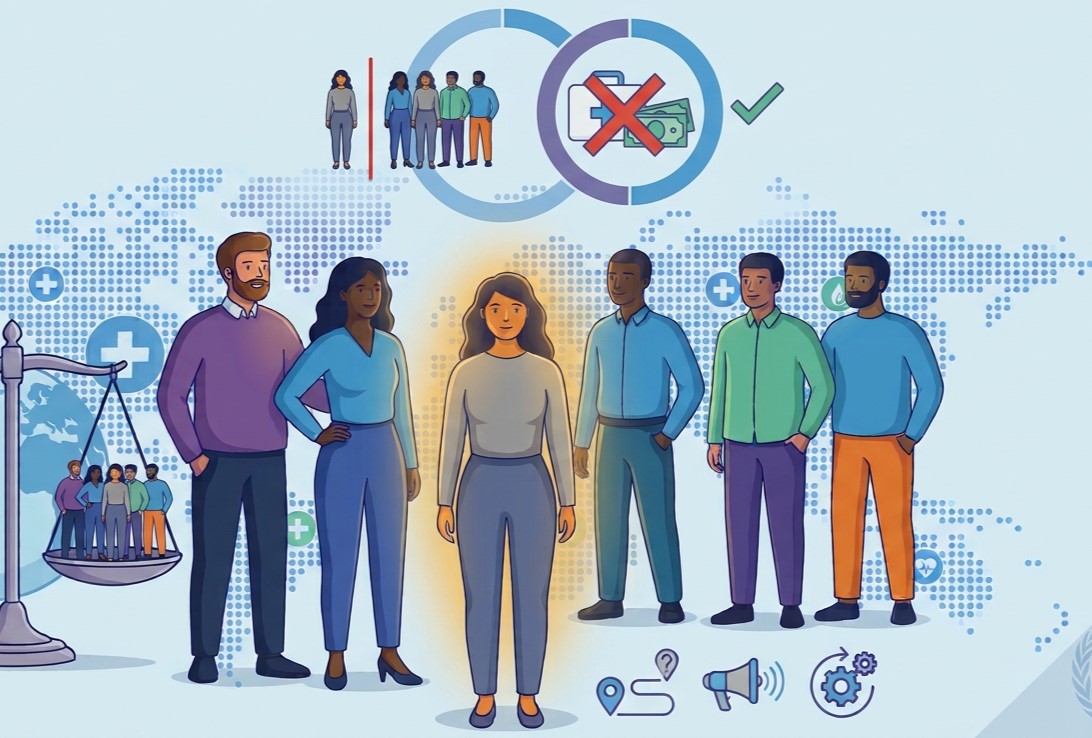
Around 17.5% of the world’s adult population experiences infertility at some point in life. That World Health Organization estimate sits behind the line repeated every year around Fertility Awareness Week, which runs in the United Kingdom from November 2 to 6 this year: roughly 1 in 6 people.
The figure is easy to quote and easy to misread. It describes how common infertility is. It says nothing about who can reach care, or how far they must travel for it. Those are the questions these infertility statistics raise for anyone working in reproductive medicine, including the people who move reproductive material between clinics.
What Do the WHO Infertility Statistics Show?
WHO estimates that 17.5% of adults experience infertility during their lifetime, based on 133 studies covering 1990 to 2021. Its later guidance phrases the estimate as 1 in 6 people of reproductive age.
Three details matter more than the headline:
- Income barely changes the prevalence. Lifetime prevalence was 17.8% in high-income countries and 16.5% in low- and middle-income countries.
- The definition is not gendered. WHO defines infertility as a disease of the male or female reproductive system, with male, female or unexplained factors.
- The estimate has blind spots. WHO itself reports a persistent lack of data in many countries and some regions, and it has called for national data broken down by age and cause.
Read together, these findings point in one direction. Infertility is a global condition with very local consequences.
Why Is Access to Fertility Treatment Still So Unequal?
Prevalence is roughly even across income levels, and access is not. WHO states that assisted reproduction technologies, available for more than three decades, remain largely unavailable, inaccessible and unaffordable in many parts of the world.
Cost is the most visible barrier. WHO notes that care is largely funded out of pocket in many countries, and that a single round of IVF can cost double the average annual household income in some settings. Fertility care is also rarely prioritized in national universal health coverage packages.
Law adds a second layer. What one country permits, its neighbor may restrict, particularly around third-party reproduction. WHO treats enabling legislation as essential to universal access without discrimination.
In November 2025, WHO published its first global guideline on infertility, with 40 recommendations. It calls for fertility care to be integrated into national health strategies, services and financing. That is a long-term agenda. Families deciding this year still have to work within the system as it stands.
Where Does Transport Logistics Fit in the Fertility Journey?
Transport enters the journey whenever reproductive material and the person who needs it are in different places. The WHO figures cited here do not measure how often that happens, but they describe the conditions behind it.
A patient may seek care in another country because treatment at home is out of reach financially. Another may need a jurisdiction that allows a form of family-building her own does not. Some families simply relocate after vitrification and need their embryos to follow. Clinics change, too, and so do treatment plans.
| What the data shows | What it means for embryo transport |
|---|---|
| Care is unevenly available | Embryos, oocytes and sperm may need to cross borders to reach a clinic |
| Costs fall largely on patients | Material in transit may represent savings that cannot easily be replaced |
| Rules differ by country | Paperwork must be settled before departure, since requirements change with each route |
Each of those moves carries its own risks: a cancelled connection, a checkpoint, a form that one country’s authority reads differently from another’s. Routes into Mexico, for example, can involve COFEPRIS and ANAM. None of this appears in a prevalence table, yet for a family at the end of a long and costly process, it is the part of the journey that can feel most exposed.
What should clinics and patients check before material moves?
Four questions separate a documented embryo transport from a hopeful one:
- Who physically holds the dry shipper at each stage? Every handoff should be named and recorded in the chain of custody.
- Does the material stay in the cabin, and away from X-ray screening? Ask for this in writing.
- How is temperature recorded? A data logger report should show the whole route, not just the arrival reading.
- Who confirms destination requirements? Permits and clinic authorizations should be settled before a flight is booked.
What Is Mondo IVF's Role in This Ecosystem?
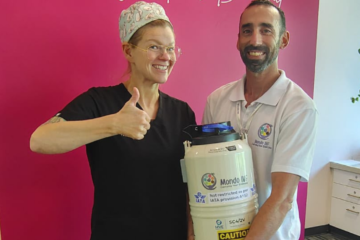
Mondo IVF provides hand-carry transport of embryos, oocytes and sperm across 30+ countries. It does not treat infertility or set health policy, and logistics alone will not close the access gap WHO describes. Its part is narrower: making sure that distance does not put reproductive material at risk.
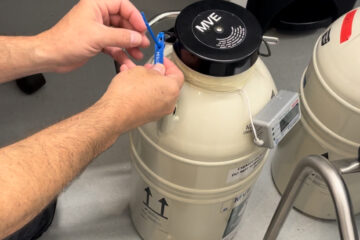
On every Mondo IVF route, a hand-carry courier, or on-board courier (OBC), keeps the material in the aircraft cabin. The dry shipper never goes through X-ray. It holds a temperature of -196°C, a data logger records readings every 20 minutes, and a full temperature report is provided after delivery. Mondo IVF also handles regulatory coordination along the route.
That work carries a simple idea, which the company calls Science with Heart: technical precision matters because of who is waiting at the other end.
If WHO’s guideline moves fertility care into more national systems, more clinics will be treating more patients, and it is reasonable to expect more material moving between them. Providers and clinics that prepare for that now will serve those families better.
Planning to move embryos, oocytes or sperm between clinics? Talk to the Mondo IVF team about your route, or read why hand-carry is the gold standard in IVF cryotransport.
Frequently Asked Questions
When is Fertility Awareness Week?
National Fertility Awareness Week is a UK campaign held each year in early November. The 2026 edition runs from Monday, November 2 to Friday, November 6, led by the charity Fertility Action. It seeks to change perceptions, provide support and raise funds for everyone struggling with fertility issues. The United States holds its own national awareness week in April.
Is infertility mainly a female health issue?
No. WHO recognizes male, female and unexplained factors. Male infertility is most commonly linked to problems with the ejection of semen, absent or low levels of sperm, or abnormal sperm shape and movement. Female factors can involve the ovaries, uterus, fallopian tubes or endocrine system. Diagnosis belongs with a fertility specialist, who can assess each person individually.
How long can a dry shipper maintain cryogenic temperature?
A dry shipper maintains cryogenic temperature for 7 to 21 days without a liquid nitrogen refill, depending on tank size. That margin gives a hand-carry courier room to absorb a cancelled connection or a customs delay without compromising the material. Ask your provider which tank is planned for your route and how much reserve it leaves.
Can embryos be transported internationally?
Yes, provided the origin clinic, the receiving clinic and the destination country’s rules are aligned. Requirements vary by route and may include consent forms, clinic authorizations and import permits. Starting early matters, because some approvals take weeks. Your clinic and transport provider should confirm the exact list for your route before any travel date is set.
0 Comments