Essentials HIPAA Safeguards for Medical Courier Services
The transport of medical materials such as laboratory specimens, reproductive cells, and patient records requires strict regulatory compliance. Medical couriers often handle Protected Health Information (PHI) and sensitive biological materials, placing them under the scope of healthcare privacy regulations such as HIPAA.
Failing to follow these regulations can result in severe consequences, including financial penalties, legal liability, and reputational damage for healthcare organizations and logistics providers. Because of this, medical courier services must implement a comprehensive framework of administrative, physical, and technical safeguards designed to protect both biological materials and patient data throughout the transport process.
This article explores the essential safeguards required for HIPAA compliance in medical logistics, the risks associated with regulatory violations, and the best practices that ensure safe and legally compliant transport.
What is HIPAA Compliance in Medical Logistics?
HIPAA (Health Insurance Portability and Accountability Act) establishes strict standards for protecting Protected Health Information (PHI). PHI includes any identifiable patient data, such as names, medical records, laboratory results, insurance information, or even shipping data that could reveal a patient’s identity.
Medical couriers frequently transport items directly linked to this type of sensitive information. As a result, they are considered business associates under HIPAA and must comply with specific regulatory obligations when handling medical shipments.
These obligations include secure handling of patient information, strict documentation of transport procedures, and safeguards designed to prevent unauthorized access or data breaches.
Essential HIPAA Safeguards for Medical Courier Services
To maintain compliance, HIPAA requires the implementation of three categories of safeguards: administrative, physical, and technical.
Administrative Safeguards
Administrative safeguards refer to organizational policies and procedures designed to manage compliance risks.
Key administrative safeguards include:
- HIPAA Training: Couriers must receive training on handling PHI, recognizing security risks, and responding to potential data breaches. Regular training updates and simulated breach drills are recommended.
- Business Associate Agreements (BAAs): Courier companies must sign formal agreements with healthcare providers outlining their responsibilities for protecting PHI.
- Risk Assessments: Regular security audits help identify vulnerabilities in transportation procedures, data management systems, and operational workflows.
These measures ensure that employees understand their responsibilities and that organizations actively manage compliance risks.
Physical Safeguards
Physical safeguards focus on protecting medical materials and sensitive data during transportation.
Common physical safeguards include:
- Secure Storage: Medical materials must be stored in locked compartments within transport vehicles.
- Tamper-Proof Packaging: Sealed containers or opaque bags help prevent unauthorized access or visual exposure of sensitive materials.
- Chain of Custody Documentation: Every transfer must be documented, including the personnel involved, timestamps, and locations.
Maintaining a clear chain of custody ensures accountability and traceability throughout the entire logistics process.
Technical Safeguards
Technical safeguards involve the use of technology to protect sensitive information during transport.
Examples include:
- Encrypted Tracking Systems: Delivery platforms must encrypt sensitive data to prevent unauthorized access.
- Access Controls: Only authorized personnel should be able to view shipment details or patient information.
- Secure Communication Systems: Electronic proof-of-delivery (ePOD) systems and digital documentation platforms help maintain an auditable record of each transport.
These safeguards are essential for preventing cyber risks and ensuring that patient data remains confidential.
Best Practices for Minimizing PHI Exposure
Beyond the core safeguards required by HIPAA, medical courier services should implement additional practices designed to reduce the risk of data exposure.
Best practices include:
- Using coded identifiers instead of full patient names on shipping labels
- Limiting the amount of identifiable data included in documentation
- Verifying recipient identity before releasing sensitive packages
- Requiring signatures upon delivery
- Using GPS tracking systems to monitor shipment location in real time
These practices help minimize the likelihood of accidental exposure of patient information.
What Are the Penalties for HIPAA Violations?
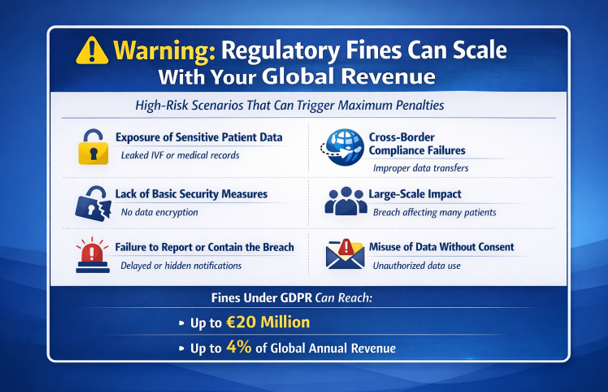
Failure to comply with healthcare data protection regulations can lead to serious consequences for organizations and individuals involved in medical logistics.
Financial penalties for HIPAA violations can range from $100 to $50,000 per incident, depending on the severity of the breach and whether negligence was involved.
However, in a global healthcare environment — especially in areas like fertility and cross-border medical logistics — the risk extends beyond U.S. regulations.
In addition to regulatory fines, other potential consequences include:
- Legal action from affected patients
- Loss of contracts with healthcare providers
- Regulatory investigations
- Suspension of operational licenses
- Severe reputational damage
If a breach occurs, organizations must follow strict reporting procedures. Affected patients and healthcare partners must be notified within 60 days, and breaches affecting more than 500 individuals must be reported to the U.S. Department of Health and Human Services (HHS).
Why Compliance Is Critical in Medical Transport
Healthcare logistics is fundamentally different from traditional courier services. Medical couriers are responsible not only for transporting physical materials but also for safeguarding sensitive medical data.
A single compliance failure can lead to:
- financial penalties
- legal liability
- loss of healthcare partnerships
- long-term reputational damage
For this reason, regulatory compliance must be embedded into every stage of medical transport operations, from documentation and packaging to tracking and delivery.
Conclusion
HIPAA compliance plays a critical role in maintaining security, privacy, and trust within healthcare logistics. Medical courier services must implement comprehensive administrative, physical, and technical safeguards to protect protected health information during transport.
By investing in proper training, secure infrastructure, and transparent documentation processes, organizations can minimize risks, maintain
regulatory compliance, and ensure the safe delivery of sensitive medical materials.
In an industry where both patient privacy and biological integrity are at stake, compliance is not simply a regulatory requirement—it is an essential component of responsible medical logistics.
HIPAA Compliance in Medical Logistics FAQs
What is PHI in medical logistics?
Protected Health Information (PHI) refers to any data that can identify a patient and is related to their healthcare. This includes medical records, laboratory results, names, addresses, insurance information, and even shipment details linked to a patient.
Are medical couriers required to follow HIPAA regulations?
Yes. Medical courier companies that handle patient information or medical samples linked to individuals are considered business associates under HIPAA and must follow strict compliance requirements
What happens if a medical courier violates HIPAA?
HIPAA violations can lead to financial penalties ranging from $100 to $50,000 per incident, as well as legal claims, regulatory investigations, and potential loss of healthcare contracts.
Why is chain of custody important in medical transport?
Chain of custody documentation ensures that medical materials and associated patient data are tracked and accounted for throughout the entire transportation process, reducing the risk of loss, tampering, or misidentification.



0 comentarios